
Uge Schedule Source: Login, Features and Prices
UGE Schedule Source.
Login, Features, Customer Service, Pricing, and Common Problems
UGE Schedule Source, often associated with ScheduleSource TeamWork, is a cloud-based workforce management and employee scheduling platform used by organizations that need better control over shifts, staffing, attendance, leave, and day-to-day workforce communication. Instead of relying on paper schedules, spreadsheets, long email chains, or manual shift changes, companies use the platform to keep scheduling data in one central place. Managers can build, update, and publish schedules, while employees can log in to view shifts, check work details, request time off, track hours, and in many cases swap or claim shifts through self-service tools.
For companies with rotating schedules, multiple departments, multi-location staffing, or compliance rules around breaks, hours, and qualifications, a system like UGE Schedule Source can reduce confusion and save a significant amount of administrative time. It is designed to support both managers and employees. Managers gain more control over labor planning, while employees get easier access to their schedules from a web browser or mobile device.
What Is UGE Schedule Source?
UGE Schedule Source is best understood as a workforce scheduling and workforce management solution. In many online references, it is connected to ScheduleSource TeamWork, a platform built for organizations that need to manage schedules, time tracking, employee availability, leave, labor rules, and operational coverage in a more automated way. In practical use, employees often know it simply as the place where they check their work schedule, see updates, or request time off.
The “UGE” portion is commonly described as the engine behind the scheduling process. In simple language, it refers to the scheduling logic that helps the system organize staff based on rules, roles, hours, locations, and availability. That matters because manual scheduling gets messy very quickly. The moment a workplace has multiple shifts, part-time staff, full-time staff, absences, and last-minute changes, errors become common. A scheduling engine helps reduce those conflicts and keeps the system more structured.
Instead of one person constantly texting employees about coverage changes, the system can help publish updates in one location. Instead of workers calling in just to ask whether they are on the schedule next Tuesday, they can usually log in and see it themselves. That is the core appeal of the platform: centralization, accuracy, and speed.
What Is UGE Schedule Source Used For?
Most organizations use UGE Schedule Source for several connected tasks rather than just one. The most visible use is employee scheduling, but the system typically extends far beyond that. Depending on how an employer has configured it, the platform may be used for shift creation, schedule publication, attendance tracking, leave requests, shift swapping, employee messaging, time clock activity, and labor rule enforcement.
Typical uses include:
- Creating employee schedules for daily, weekly, or monthly staffing needs
- Publishing shifts to employees through a secure portal
- Tracking attendance and time worked
- Managing leave balances, vacation requests, and approvals
- Handling shift swaps, open shifts, and coverage requests
- Reducing overstaffing and understaffing
- Supporting compliance with rules on hours, breaks, qualifications, and overtime
- Providing reporting and labor analytics for managers
In other words, it is not just a calendar. It is a workforce coordination system.
How UGE Schedule Source Works
The system usually follows a structured workflow. First, an employee account is created or enabled by the employer. Next, the organization defines job roles, locations, scheduling rules, and staffing requirements. Managers then build schedules and publish them. After that, employees log in to review their shifts and, depending on permissions, may also request leave, submit availability, trade shifts, or claim open shifts.
A typical scheduling cycle looks like this:
- Employee accounts are created by the employer or administrator.
- Work roles, departments, locations, and scheduling rules are set.
- Managers create schedules manually or with system assistance.
- Schedules are published to the employee portal or app.
- Employees review shifts and receive notifications of changes.
- Requests for leave or swaps are submitted.
- Managers review and approve changes where required.
- Time and attendance data feed into workforce and payroll processes.
Because everything happens in one platform, it becomes easier to keep everyone on the same page. That is one of the main reasons organizations adopt digital scheduling tools in the first place.
UGE Schedule Source Login: How to Sign In
The exact login page can vary by employer, because many organizations use their own portal link or TeamWork code. That means there is no single universal employee login URL that works for every company in the same way a Gmail or Facebook login works. Your employer normally provides the correct portal address, company code, and your username or employee ID.
In most cases, the login process is straightforward:
- Open your employer’s UGE Schedule Source or ScheduleSource TeamWork login page. For UAL Airlines Employees, the Uge Schedule Source Login page is at https://signon.ual.com/oamfed/idp/initiatesso?providerid=ScheduleSource. For the ScheduleSource Teamwork Login, visit https://tmwork.net/signin
- Enter your username, employee ID, or assigned login name.
- Enter your password.
- If required, enter the organization code or portal code.
- Select Sign In or Login.
- Open your dashboard, schedule, calendar, or time section.
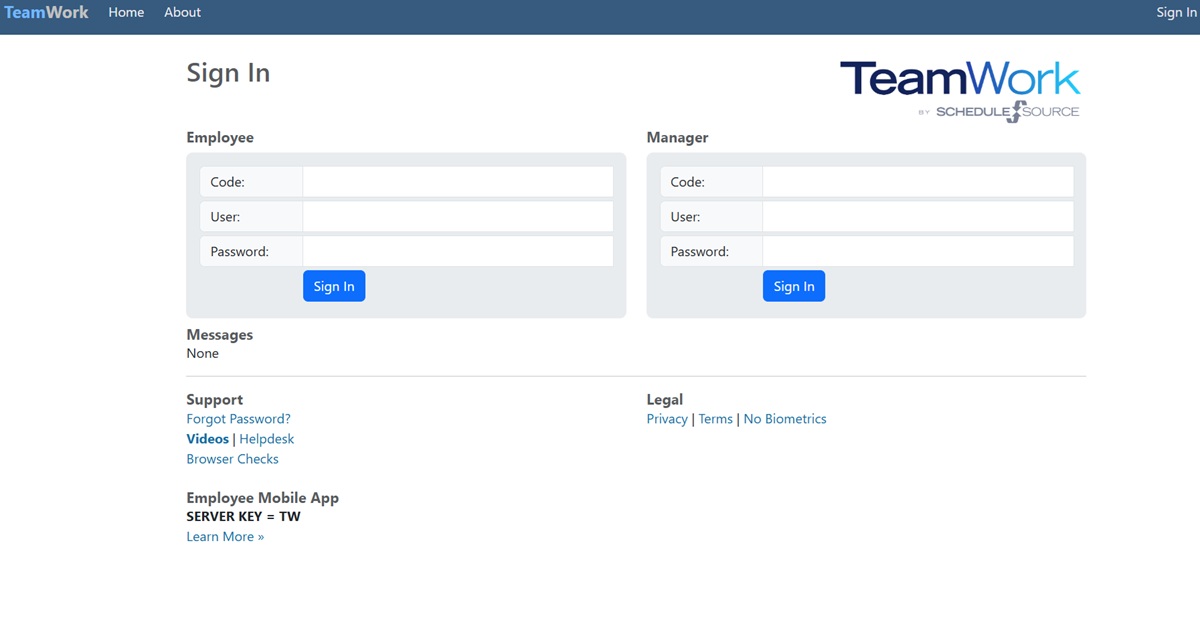
If your employer uses the mobile app, you may need a one-time app key the first time you sign in. After installing the app, users are often asked to enter the one-time key, organization code, username, and password. The code and username/password are usually the same credentials used for the web portal, while the one-time key is typically found inside the TeamWork website under the mobile app area or provided by the employer.
Once logged in, employees may be able to:
- View current, future, and past shifts
- See full schedule details
- Check totals or hours worked
- Request time off
- Post or claim shifts on a Swapboard
- Clock in and out if time clock features are enabled
- Receive notifications about schedule changes
- Update contact or profile information
What to Do If UGE Schedule Source Login Is Not Working
Login problems are one of the most common complaints with any workforce portal. In many cases, the problem is not the platform itself but a wrong login page, expired password, missing company code, or a temporary sync issue with the employer’s account setup.
If you cannot sign in, check these things first:
- Make sure you are using the correct employer-specific login page
- Confirm that your username or employee ID is correct
- Check whether your password was recently changed or expired
- Verify that your organization code is entered correctly
- Clear browser cache or try a different browser
- Try the mobile app if the website is not loading, or vice versa
- Confirm your account has been activated by your manager or administrator
If the system says your account is invalid, locked, disabled, or not found, that usually means you need help from your organization’s scheduler, administrator, HR team, or workforce management contact. If the issue affects many users at once, it may be a system outage or maintenance event.
UGE Schedule Source App and Mobile Access
One major advantage of UGE Schedule Source is remote access. Employees do not have to be on-site just to check tomorrow’s shift or review an approved day off. With the mobile app, users can often do many of the same tasks they would perform on the desktop portal, including viewing schedules, seeing shift details, posting shifts to a swap board, claiming eligible shifts, reviewing leave requests, and receiving notifications.
Mobile access is especially important for shift-based workplaces. Workers who do not sit at a desk all day still need a reliable way to see last-minute schedule updates. A mobile-first experience also reduces the number of routine questions managers receive, because employees can look up information themselves rather than calling or texting for every small detail.
That said, not every feature is enabled for every organization. Employers can configure permissions differently. One company may allow workers to claim open shifts from the app, while another may only allow them to view schedules and submit leave requests.
Main Features of UGE Schedule Source
1. Employee Scheduling
This is the platform’s core function. Managers can assign shifts, create repeating patterns, fill open coverage, and publish schedules to employees. In more complex environments, scheduling can be driven by rules, credentials, staffing demand, or labor thresholds.
2. Time and Attendance Tracking
The system can track work hours, clock events, attendance status, overtime, and related payroll data. This helps employers monitor who is on time, who is absent, and whether labor hours are aligning with the published schedule.
3. Employee Self-Service
Employees can often manage common schedule-related tasks without needing a manager to manually handle every request. This may include checking shifts, requesting leave, reviewing hours, updating availability, or using swap features.
4. Shift Swapping and Swapboard
One of the most useful features for many organizations is the ability to post, trade, or claim shifts. Instead of a supervisor managing every single change manually, employees may be able to offer shifts or pick up open coverage, subject to employer rules and eligibility checks.
5. Leave Management
Vacation, sick time, leave balances, and approvals can be centralized in the system. This reduces the risk of managers overlooking requests or accidentally scheduling someone who was already approved to be off.
6. Notifications and Alerts
Schedule changes matter only if employees actually see them. Notifications by email, SMS, or push alert can help workers react faster when there is a new shift, a swap opportunity, or a change to an existing schedule.
7. Reporting and Analytics
Managers often need more than just a visible schedule. Reporting tools can help them analyze labor costs, hours worked, attendance patterns, schedule adherence, and staffing trends over time.
8. Integration Possibilities
Workforce scheduling becomes much more useful when connected to payroll, HR, and related systems. Integrated workflows reduce duplicate data entry and improve accuracy.
Who Uses UGE Schedule Source?
UGE Schedule Source is most useful in organizations with complex scheduling needs. It is not just for one industry. It fits workplaces where employee hours vary, shifts rotate, staffing rules matter, and schedules change frequently.
Common use cases include:
- Healthcare organizations with rotating clinical or support staff
- Higher education institutions with student workers and departmental staffing
- Retail and hospitality operations with changing daily demand
- Transportation and contact center environments with variable staffing patterns
- Multi-location businesses that need centralized scheduling and labor control
These environments tend to benefit the most because scheduling mistakes there are expensive. Too few workers can hurt service levels. Too many workers can drive up labor costs. A structured scheduling platform helps manage that balance.
Benefits of Using UGE Schedule Source
Better Organization
Everything is stored in one system instead of scattered across spreadsheets, texts, emails, and paper schedules. That reduces confusion and improves accountability.
Faster Schedule Updates
Managers can adjust shifts quickly, and employees can usually see changes right away. This is especially helpful in workplaces where coverage changes frequently.
Improved Accuracy
Digital scheduling can reduce overlapping shifts, missed assignments, inconsistent records, and timekeeping mistakes. The more complex the workforce, the bigger this benefit becomes.
Greater Employee Visibility
Employees can review their own shifts, hours, and requests without waiting for someone else to answer them. That self-service convenience improves the day-to-day experience.
Compliance Support
For organizations that need to follow labor rules, break requirements, overtime controls, union rules, or credential restrictions, rule-based scheduling can help reduce violations.
Labor Cost Control
Forecasting and better schedule design can reduce unnecessary overtime and avoid overstaffing. That makes the system attractive to operations and HR leaders, not just schedulers.
UGE Schedule Source Pricing
Pricing is one of the most searched topics, but it is also one of the least transparent. In practice, UGE Schedule Source pricing is usually handled on a quote basis rather than with a simple public monthly plan listed on the homepage. That means your organization normally needs to contact ScheduleSource or request a demo to get pricing tailored to company size, modules, locations, and workforce complexity.
This is common for workforce management software because pricing often depends on factors such as:
- Number of active employees
- Number of locations or departments
- Whether time and attendance is included
- Whether leave management is included
- Use of mobile app functionality
- Integration needs with payroll or HR systems
- Reporting and analytics requirements
- Implementation and training scope
If you are an employee, there is generally no direct cost to log in and use the system your employer provides. If you are a company evaluating the software, the best next step is usually to request a demo and a vendor quote.
How to Contact UGE Schedule Source Customer Service
If you are an employee and need immediate help, your first contact should usually be your employer’s scheduler, manager, HR office, or system administrator. That is because ScheduleSource hosts the system, but your employer controls your account, permissions, portal access, and many configuration choices.
If your organization needs vendor-level help or you are researching the software as a buyer, customer service and contact routes generally include sales and support channels. In many cases, companies can request a demo, ask about implementation, or contact support for platform issues.
Before contacting support, gather the following details:
- Your organization name
- Your portal or TeamWork code
- Your username or employee ID
- The exact error message shown
- The browser or app version you are using
- The date and time the problem occurred
- Screenshots if possible
Providing those details usually makes support faster and more accurate.
Common Problems Users Have With UGE Schedule Source
The most common issues are usually practical ones rather than technical mysteries. People often run into problems signing in, finding the correct company code, seeing an empty schedule, understanding why they cannot claim a shift, or figuring out why the app is asking for a one-time key.
Other frequent complaints include:
- Password reset loops
- Schedule changes not appearing immediately
- Clock-in restrictions due to location or permissions
- Missing notifications
- Leave requests that appear stuck in pending status
- Shift swaps that are visible but not claimable
- Confusion between the employer’s portal and the general vendor site
Most of these issues are fixable once you know whether the problem is caused by credentials, permissions, publication timing, app setup, or employer-specific rules.
Frequently Asked Questions About UGE Schedule Source
1. What is UGE Schedule Source used for?
UGE Schedule Source is used to manage employee schedules, attendance, leave, and shift-related communication in one platform. Managers use it to create and publish schedules, while employees use it to check shifts, request changes, and review work details. It is designed to make scheduling more accurate, faster to manage, and easier to access from different devices.
2. Is UGE Schedule Source the same as ScheduleSource TeamWork?
In many online references, UGE Schedule Source is discussed together with ScheduleSource TeamWork because they are connected to the same workforce management environment. Employees may use the terms interchangeably depending on what their employer calls the system. In practical terms, if your company uses TeamWork by ScheduleSource, you are likely using the same broader scheduling ecosystem people refer to as UGE Schedule Source.
3. How do I log in to UGE Schedule Source?
You usually log in through an employer-specific portal rather than one universal public login page. Your company normally gives you the correct link, your username or employee ID, and your password or first-time setup steps. If your company also uses the mobile app, you may need a one-time app key during initial setup.
4. Why is my UGE Schedule Source login not working?
The most common reasons are an incorrect password, wrong organization code, incorrect login page, or an account that has not been activated properly. It can also happen after a password change, browser issue, or account lockout. Start by double-checking your credentials, then contact your manager or administrator if the problem continues.
5. What should I do if I forgot my password?
Use the password reset option if your organization has enabled it on the login page. If there is no reset link, your company may require an administrator, scheduler, or HR contact to reset it for you. After resetting the password, try signing in again on the website before assuming the mobile app is the problem.
6. Why does the mobile app ask for a one-time key?
The mobile app often requires a one-time key during first-time setup so it knows which employer environment to connect to. This key is not always the same as your username or company code. If you do not have it, check your TeamWork website instructions or ask your employer for the correct mobile setup details.
7. Can I use UGE Schedule Source on my phone?
Yes, many organizations support mobile access through the ScheduleSource TeamWork app. Depending on employer settings, you may be able to view schedules, receive notifications, check leave, use swap features, and clock in or out. However, available features depend on how your employer has configured the system.
8. Why can I log in on the website but not in the app?
This often happens when the one-time key was entered incorrectly, the organization code is wrong, or the saved login information in the app is outdated. It can also happen if the employer has not enabled mobile access for your account or if the company is using an older release that does not support the feature you expect. Re-enter the setup details carefully and contact your administrator if the problem continues.
9. Why is my schedule missing after I log in?
A missing schedule does not always mean your shifts were removed. In many cases, the schedule has not been published yet, the wrong date range is selected, or the manager is still editing it. Refresh the page, check the calendar period, and then ask your supervisor whether the latest schedule has officially been posted.
10. Why can’t I see next week’s shifts yet?
Many organizations publish schedules on a specific day rather than showing draft schedules in advance. If the upcoming week is not yet published, employees may see a blank area even though managers are already working on it. This is usually a workflow setting, not an app malfunction.
11. Can I request time off in UGE Schedule Source?
In many organizations, yes. The employee self-service side of the system often allows workers to submit leave or time-off requests directly through the portal or app. Whether you can do that depends on your employer’s configuration and approval rules.
12. Why is my time-off request still pending?
A pending request usually means a manager or approver has not reviewed it yet. In some workplaces, multiple approval levels exist, so even if one person sees it, another approval may still be required. If it has been pending for too long, follow up with your supervisor rather than assuming the request failed.
13. Can I swap shifts with another employee?
Many organizations enable a shift swap or Swapboard feature that lets employees post, trade, or claim eligible shifts. However, not every employer allows every type of swap, and eligibility rules may limit which shifts you can take. If you do not see swap options, your employer may have disabled the feature for your location or role.
14. Why can I see a shift on the Swapboard but not claim it?
That usually means a rule is blocking you. You may not have the right qualifications, may already be scheduled during that time, may exceed hours or overtime limits, or may not meet location-specific eligibility rules. In most cases, the system is protecting against scheduling conflicts rather than failing randomly.
15. Does UGE Schedule Source track time and attendance?
Yes, many employers use it for time and attendance as well as scheduling. That can include web time cards, clock events, totals, attendance status, and integration with payroll processes. The exact tools available to you depend on which modules your company has enabled.
16. Why can’t I clock in from my phone?
Some organizations restrict mobile clock-in by location, device, IP range, or role. Others may allow schedule viewing on mobile but require time entry through a kiosk, web portal, or on-site method. If the clock button is missing or blocked, that usually reflects employer settings rather than a universal limitation of the platform.
17. How do notifications work in UGE Schedule Source?
Notifications can be sent by push alert, email, or text depending on the organization’s setup. They may be used for schedule changes, swap board activity, approvals, alerts, or other workforce events. If you are not receiving them, check both your app notification permissions and the contact details stored in your employee profile.
18. Why am I not receiving schedule change alerts?
There are several possible causes. Notifications may be disabled on your phone, your email address or phone number in the system may be outdated, or your employer may not have enabled that type of alert for your account. Start by checking profile details and app permissions before escalating the issue.
19. Can I view past schedules or hours worked?
In many organizations, yes. Employees may be able to review past shifts, totals, hours worked, or time entries from earlier periods. If you do not see older data, it may be hidden by permissions or by the date range currently selected.
20. Is UGE Schedule Source only for large companies?
No, but it is especially valuable for organizations with complex scheduling needs. Multi-location businesses, healthcare providers, universities, retail operations, transportation teams, and contact centers often benefit the most. Smaller organizations can also use it, especially if manual scheduling has become too time-consuming.
21. What industries commonly use UGE Schedule Source?
Healthcare, higher education, retail, hospitality, transportation, service operations, and contact centers are all strong examples. These environments often have rotating shifts, variable demand, and compliance rules that make manual scheduling difficult. A structured platform helps them manage all of that more consistently.
22. Does UGE Schedule Source help with compliance?
Yes, that is one of the key reasons many organizations adopt workforce management software. The system can support rules tied to hours, breaks, overtime, credentials, and staffing restrictions. That does not replace management oversight, but it can reduce many avoidable scheduling mistakes.
23. Does UGE Schedule Source integrate with payroll?
It can, depending on the employer’s setup and purchased modules. Many organizations want schedule data, attendance data, and pay rules to connect more smoothly with payroll and HR systems. Integration reduces duplicate data entry and helps lower payroll errors.
24. How much does UGE Schedule Source cost?
Public pricing is usually not displayed in a simple flat-rate format for general buyers. In most cases, companies need to request a quote based on workforce size, modules, number of locations, and implementation needs. If you are an employee, you normally do not pay anything directly to use the system your employer provides.
25. Can I change my availability in the system?
Many organizations allow employees to update availability or submit availability preferences through the portal. That said, not every employer turns this feature on, and some require manager approval before schedule rules change. If you do not see an availability section, ask your scheduler whether your organization uses it.
26. Why does the system show a conflict when I try to take a shift?
A conflict message usually means the platform has detected a rule issue. You may already be working another shift, exceed maximum hours, break a qualification rule, or violate a location-specific scheduling restriction. These messages are often frustrating, but they are usually protecting schedule integrity.
27. What if my account says disabled or locked?
A disabled or locked account usually needs administrator help. It may happen after too many failed login attempts, after a job status change, or after account maintenance by HR or management. If that happens, contact your employer’s scheduling administrator or HR support rather than repeatedly retrying the same password.
28. Is there customer service for UGE Schedule Source?
Yes, there are vendor contact routes for sales, demos, and support, but employees should usually start with their own employer first. Your company controls your account, permissions, and portal setup, so many employee-level issues can only be resolved internally. Vendor support becomes more relevant when the organization itself is troubleshooting the platform.
29. Why does my schedule look different from a coworker’s schedule?
That can happen for several reasons. You may be assigned to different roles, different locations, or different date filters, or your employer may have different permissions enabled for your account. If the difference looks like a real error rather than a view setting, ask a manager to verify the published schedule.
30. Is UGE Schedule Source easy to use for new employees?
Most employees find the basic functions manageable once they know where to log in and what credentials to use. The most confusing part is usually initial setup, especially if the employer uses organization codes, one-time keys, or custom portal links. After that, viewing schedules and handling routine requests is generally much easier than relying on paper schedules or manual updates.
For New Users.
UGE Schedule Source is more than just a place to check tomorrow’s shift. It is a broader workforce management system designed to bring scheduling, time tracking, leave, staffing rules, and communication into one organized platform. For managers, it reduces administrative effort and improves staffing visibility. For employees, it makes schedules more accessible and gives them a better self-service experience.
If you are trying to use UGE Schedule Source as an employee, the most important thing is to get the correct employer login details, including the right portal link, code, username, password, and mobile setup key if applicable. If you are evaluating it as a business, focus on the areas where the platform delivers the most value: structured scheduling, shift flexibility, labor control, attendance tracking, and employee self-service.
When used well, a digital scheduling platform can replace confusion with clarity. That is ultimately why systems like UGE Schedule Source matter. They help organizations stay organized, responsive, and far more efficient than manual scheduling ever could.